
Gamification and AI for Volunteerism: Volunteer Quest: Engage and Empower
1. Highlighting 6D Playbook
Define the Problem
Singapore’s ageing population is growing, yet Singapore’s nursing home volunteerism rates remain stagnant. According to a study conducted by the National Council of Social Service, young adults are more inclined to volunteer if it improves their employment opportunities (Ang, 2023).
We observed a similar trend amongst university students, including those in Singapore Management University (SMU), who often show limited interest in volunteering, as they prioritise career and networking opportunities. Even when they do volunteer, many avoid senior homes due to a perceived generational gap in language, values, and interests. While youth volunteering rates fluctuate, motivations remain driven more by personal growth and career advancement than by community service (National Volunteer & Philanthropy Centre, 2025).
Determine Goals
Our networking-while-volunteering initiative aims to spark and sustain interest in volunteering for nursing homes among SMU students by offering values aligned with their career priorities. We also aim to increase both employment opportunities and volunteerism rates among university students.
Decide Target Behaviours and Emotions
Target Behaviours
Through this process, we want volunteers to enjoy volunteering and form meaningful connections with the elderly and industry professionals. Additionally, we hope that the skills learnt will be translated into relevant workforce skills.
Describe and Profile Players
Our game caters to achievers, socialisers, and explorers. To expand on challenges faced by SMU students, we have developed two representative personas: Everyday Ethan (the achiever) and Unbothered Ryan (the socialiser). We felt that these player profiles best matched the everyday grind students face, and the sociability one possesses when interacting with the elderly and corporate clients.
Design Gamification Strategy
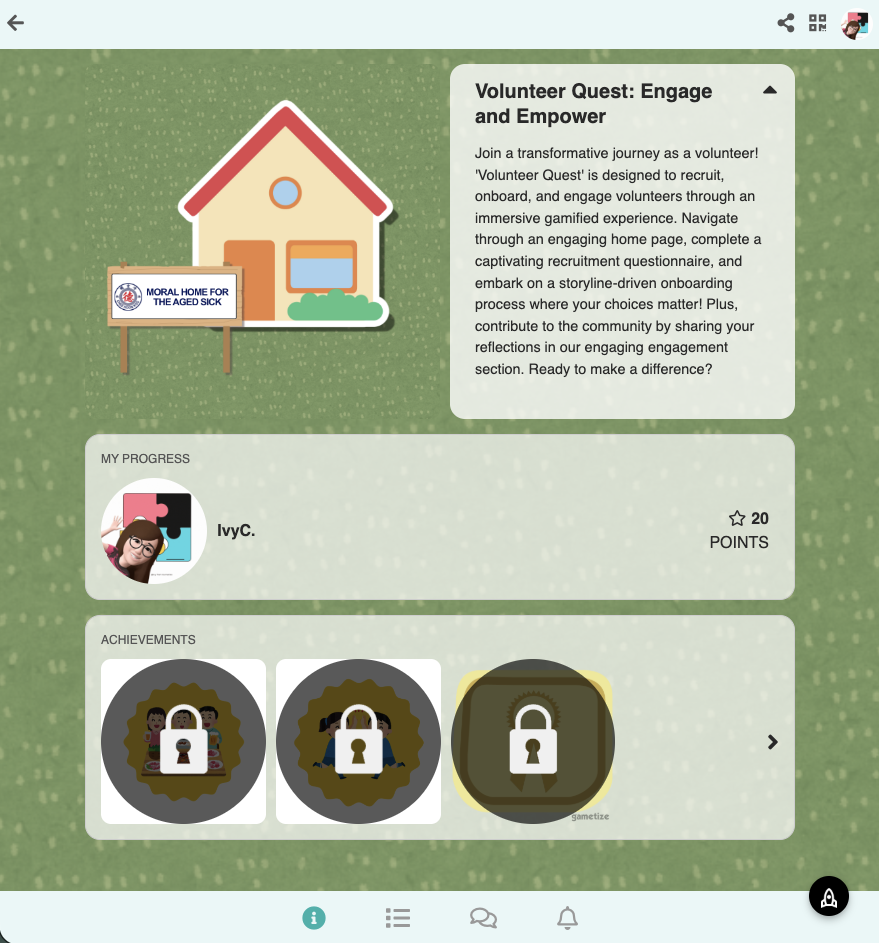
Recruitment
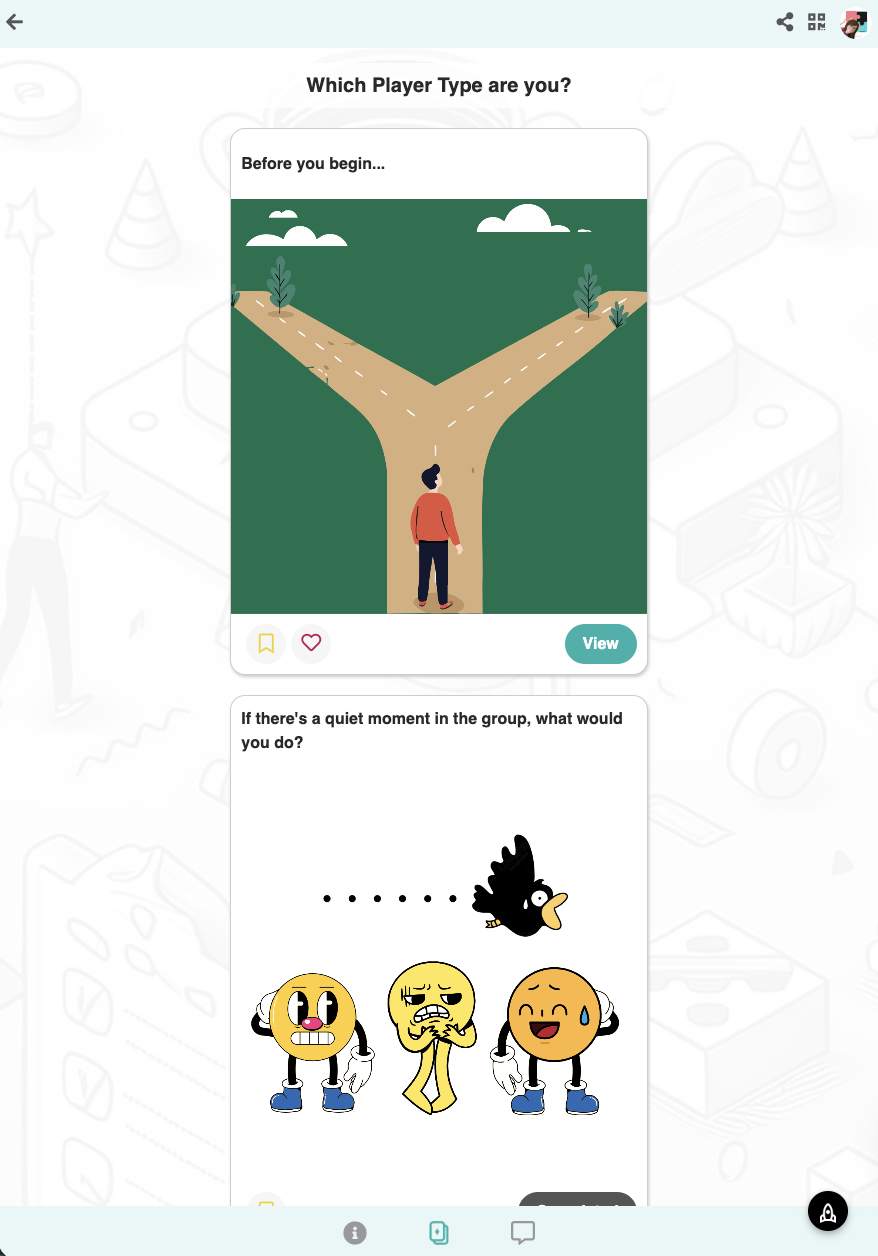
Each player will undertake a personality test, which assigns them a recommended profile character. They will then undergo respective onboarding tasks in preparation for volunteering sessions. This is the list of profiles a player can receive upon completion of the test.
- Befriender Beatrice:
Empathetic and approachable, perfect for befriending seniors! - Culinary Connoisseur Charlie:
Hands-on and passionate about food. Great help with cooking workshops and baking sessions! - Player Penelope:
Energetic and sporty. A great help in morning exercises and group play!
Onboarding
- Befriender Beatrice:
Players will learn the basics of outing procedures and interact with quiz components and short videos to leverage visual learning and active recall. At the end, players will go through an outing simulation through our ‘Outing to the Zoo” game. - Player Penelope:
Players have to complete 5 RPG-style stages, covering adaptive sports skills, safety precautions and resident care. They can only progress after finishing each stage. - Culinary Connoisseur Charlie:
At this stage, the players interact with an immersive experience in the safe kitchen quest. They will unlock new levels by answering questions correctly and identifying outliers, ensuring players’ competence in safe food handling and hygiene.
Retention
Diagnose and Analyze Content
Future plans: We plan to broaden our reach beyond SMU students and establish partnerships with a variety of reputable corporate organisations and mentors across different industries.
Limitations: Finding potential industry mentors willing to participate requires effort. It will be difficult to maintain long-term connections with industry partners and engage mentors in industries that pique the volunteers’ interests, which could affect volunteer retention rates.
2. Inspiration for this Project
The idea of involving corporate employees in our project stemmed from observing SMU students’ strong interest in networking opportunities. Our project seeks to align with our target audience’s motivations, enhancing engagement and long-term participation.
This initiative accomplishes two goals with one effort. By incentivising students to volunteer with the opportunity to network, it reduces their worries about finding connections and jobs while serving a cause. If proven successful, this project creates a potential steady pool of volunteers.
3. Our Learnings
Initially, we wanted to reach out to all university students in Singapore; however, with limited time, we reached out to SMU students to gain quicker responses. Given the tight deadlines, we learnt to set realistic and specific goals within the given timeframe. By establishing clear deadlines and keeping ambitions in check, we were able to ensure steady progress in completing a holistic and effective project.
Lastly, learning to put ourselves in the shoes of our target audience. Stopping to evaluate our own priorities as university students helped us to design a project that would appeal to other students. We hope to apply this same empathy in our future projects as well, creating effective solutions aligned with our target audience.
1. Play the game first.
2. Use the Template game for your own initiatives.
Credits:
Ian, Grace, Hadirah, Megan, Jimmy, Nia, Hui Ting, Felicia