

1. Highlighting 6D Playbook
Define the Problem
Many higher education students are increasingly turning to illicit drugs as a way to cope with significant stressors, despite being aware of the associated risks. Conventional coping strategies often feel inadequate, leading students to experiment with drugs, underestimating their addictive potential. This “just once” mentality can quickly spiral into addiction. Therefore, through gamification, we aim to educate students on the true extent of drug addictiveness while simultaneously introducing engaging, alternative stress-coping strategies to help them make informed and healthier choices.
Determine Goals
Smart Goals
- Specific: Our aim is to educate our target audience on the risk of drug use through a gamified approach. By the end of our program, participants should be able to better understand the dangers of addiction and be aware of healthier stress-coping mechanisms through interactive challenges.
- Measurable: Conduct pre and post-game surveys to monitor the increased level of knowledge regarding drug addictiveness and the decline in the desire to use drugs as a coping mechanism.
- Achievable: Collaboration with student clubs across SMU to encourage initial participation rate, and utilize Gametize’s platform to communicate and facilitate discussions.
- Relevant: Our goal aligns with the need to address student stress and drug usage in an innovative gamified approach. Furthermore, we will be consolidating feedback after our pilot phase to identify areas for improvement and enhance future iterations of the project.
- Time-based: At least 60% of the original users have completed the gamified program after 1 month, with a dropout rate of less than 10% per week.
Design Gamification Strategy
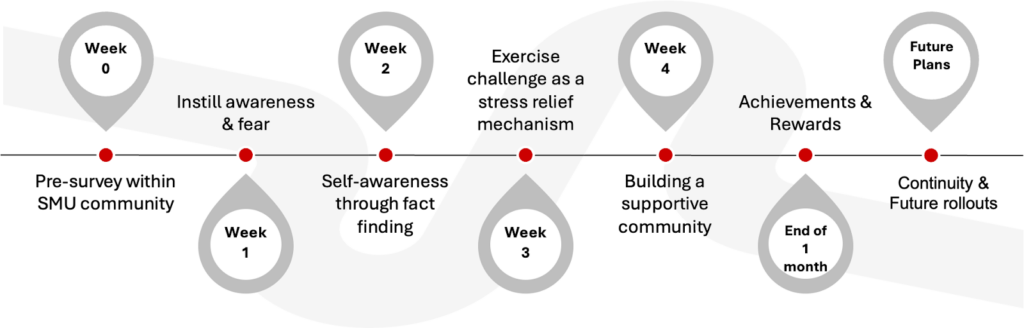
Phase 1: Instilling Fear
The program’s initial phase aims to instil fear in university students by revealing the true addictive nature of drugs through the story of someone whose life has been disrupted by substance abuse. Students will learn about the long-term effects and consequences of drug use, which will motivate them to progress to the next phase. By highlighting these shocking realities, the campaign encourages active participation in upcoming activities focused on prevention and healthier alternatives.
Phase 2: Pilot Program at SMU – Weekly Activities
Phase 2 of the campaign focuses on empowering students at SMU through a series of activities over four weeks, with opportunities to exchange points for rewards.
Learning Outcome 1: Self-Awareness
Through interactive activities on the Gametize platform, participants develop self-awareness regarding drug prevention. Week 0 starts with pre-surveys, followed by compulsory Modules 1 and 2 in Week 1, which educate students on the addictive nature and harmful effects of drugs. In Week 2, “The Hunt” encourages students to explore campus checkpoints based on clues provided to learn more about drug prevention facts and myths. This blend of physical exploration and critical reflection helps participants understand the risks of drug use, enabling them to make informed, healthier, drug-free choices.
Learning Outcome 2: Exercise as a Stress Relief Mechanism
Physical activity is a proven stress reliever, and this learning outcome emphasizes its role in promoting mental well-being. In Week 3, students participate in a series of fitness challenges by engaging in activities like yoga or running.
Learning Outcome 3: Building a Supportive Community
A strong community is essential for preventing drug use and encouraging healthier coping strategies. In Week 4, participants will share personal stories about their stress management and how they avoided negative methods like drug use. SMU Peer Helpers will facilitate the discussion zone, offering professional insights. These discussions will focus on exploring healthy coping mechanisms for stress while fostering a safe and supportive environment for students to share their experiences.
Achievements & Rewards:
To enhance engagement and ensure rewards resonate with participants, we use the SAPS (Status, Access, Power, Stuff) framework. Surveys will be conducted to identify which types of rewards students find most appealing, with categories like:
- Status: Digital badges on the Gametize platform to recognize accomplishments.
- Access: Access to diverse stress-relieving activities
- Power: Opportunities to influence future activities or lead challenges.
- Stuff: Tangible prizes like gift cards, sponsored by partners like ClassPass
Phase 3: Continuity & Future rollout
Project Safeguard aims to leverage insights derived from the pilot program and expand to other universities. By partnering with student clubs from each university, it allows for adaptability to each university’s culture while maintaining the core focus of raising
2. Learning and Reflection
Our Journey
Initially, our group’s understanding of drug use stemmed from curiosity. However, through research and insights from guest speakers, we discovered deeper factors contributing to substance use, such as students using drugs to cope with stress. Consulting with experts revealed the complex reasons behind drug use among students, often overlooked by those not affected. These insights reinforced our commitment to creating a gamified experience that raises awareness about drug use risks. Our goal is to build a platform that educates and empowers students to seek support through our game’s discussion space, helping them make informed decisions and adopt healthier coping strategies as alternatives to drug use.
Navigating through Diverse Perspective
Our interactions with various stakeholders such as mentors, previous drug abusers and Gametize’s team have broadened our understanding of the issue. However, we quickly realise that there may be an overload of information from various perspectives, some of which may be clashing. To address this, we synthesised the insights received and struck a balance between our own findings and online research to guide our project’s development. This approach allowed us to stay aligned with the goals we initially set, ensuring that our project remained focused and purposeful.
Understanding Project Limitations
Our project aims to tackle the rise of drug abuse among our target audience as we address the gap in current initiatives designed to support these individuals. While we recognize that we cannot completely eradicate drug abuse, we are committed to helping students who are struggling with stress and prevent them from seeking unhealthy coping mechanisms. Through our program, we strive to provide valuable resources and a supportive community that guide them toward healthier alternatives and informed decision-making.
1. Play the game first.
2. Use the Template game for your own initiatives.
Credits: Conrad Chan, Brandon Loo, Chen Kang Ning, Chong Xin En, Joycelyn Tay, Lukesh SO Sandramogan