
Gamification and AI for Caregivers: Culture with Luma!

1. Highlighting 6D Playbook
Define the Problem
Our culture topic reframed as a problem statement: “Foreign caregivers in Moral Home face challenges adapting to Singapore’s language, history and cultural norms.”
We identified a real gap between local caregivers and foreign caregivers or volunteers in Singapore. Many foreign caregivers face difficulties when trying to connect with elderly residents because of:
- language barriers
- cultural misunderstandings
- unfamiliarity with Singapore’s environment
Which may give limited understanding of what elderly residents may relate to emotionally and socially as well, a lack of connection overall.
Determine Goals
Our goal was to design a platform that helps users become more confident and culturally aware when interacting with seniors in Singapore. The project aimed to:
- improve basic communication
- increase awareness of local culture and daily life
- help foreign caregivers feel more connected to the community
- encourage interpersonal bonds with elderly residents

Decide Target Behaviours and Emotions
Target behaviours included:
- recognising common local phrases
- understanding cultural references
- feeling more willing/ comfortable, confident to start conversations with seniors
We also wanted to evoke positive emotions such as:
- curiosity, enjoyment, confidence and a sense of accomplishment which will spark them to learn
Describe and Profile Players
Our target players are people who are goal-oriented, curious, and motivated by visible progress. We mainly focused on the Achiever player type, as these users enjoy:
- completing tasks
- earning badges or rewards
- unlocking progress step by step
This player profile fits learners who prefer short but satisfying, easy-to-progress activities.
Design Gamification Strategy
To make the platform engaging and easy to follow, we included:
- interactive visuals
- small quizzes and challenges
- a progress bar or map-style learning path
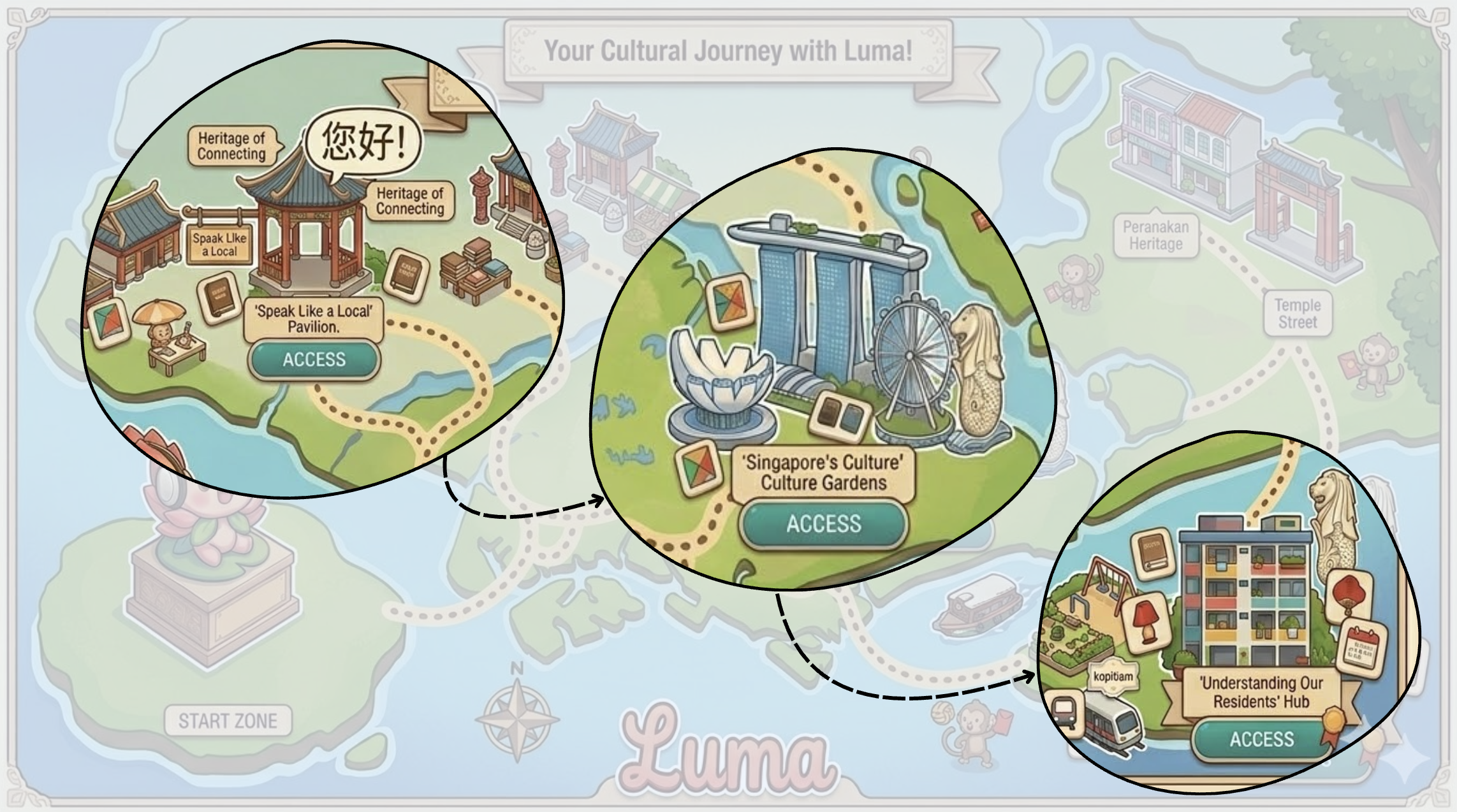
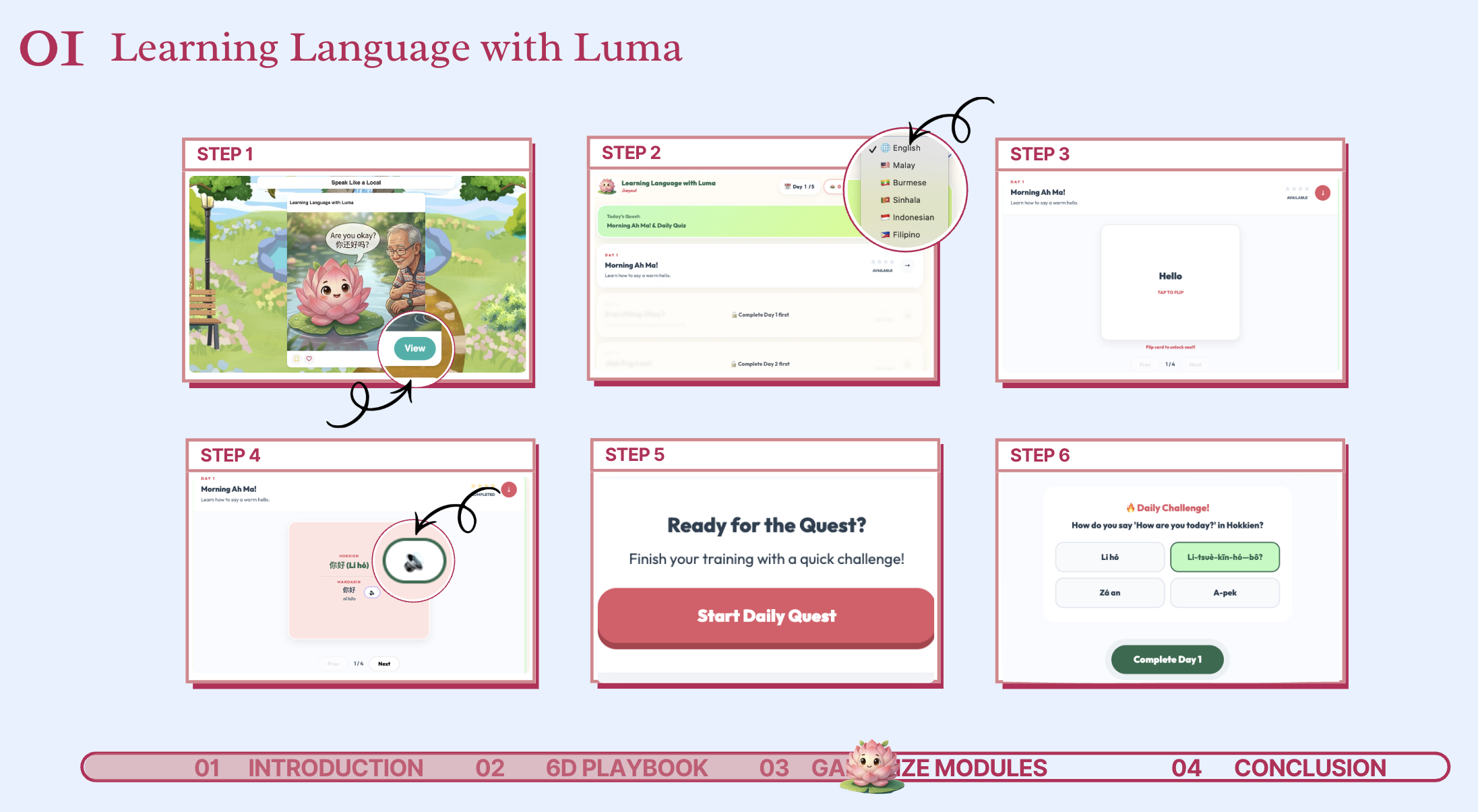
Diagnose and Analyse Content
Our content was organised into three sections:
- Speak Like a Local: introduces useful phrases and translations in Mandarin and Hokkien
- Understanding Singapore’s Culture: covers history, landmarks, food, and places of interest
- Understanding Residents’ Culture: explores generational trends, memories, and experiences from the 1950s to today
This ensured that the content was relevant, accessible, and meaningful for the target audience.

2. Inspiration for this Project
Our project addresses a real-world issue in caregiving: the difficulty foreign caregivers and volunteers may face when trying to connect meaningfully with elderly residents in Singapore. While many caregivers are able to support seniors physically, obtaining emotional and social connections are challenged when there are differences in language, culture, and everyday experiences.
By creating a gamified platform that introduces users to local phrases, Singaporean culture, and to connect to lived experiences of older residents, it fosters an understanding between the caregivers and residents. To convey information, we designed short, interactive activities that are memorable and easy to understand. This makes the learning experience more approachable and practical.
Our project supports more respectful, confident, and genuine communication. The platform does not just teach facts about Singapore, but also encourages empathy, belonging, and stronger human connection in caregiving settings, in the local environment and cultural context.
3. Our Learnings
The project helped us reflect on the challenges that foreign caregivers might face when helping to care for (elderly) residents in Singapore. In a new environment, adapting to not only caregiving tasks, but also to the language, culture, and daily life and habits are essential for them to encourage connections with seniors and build close relationships. The issue is not about their skill; but to find ways that can aid them and heighten their confidence and connection.
By playing the game, it benefits them in both practical and emotional ways – it introduces them to daily necessities and common findings, and aspects of Singaporean life that they may relate to. It helps caregivers communicate more naturally, and interact in a warmer, friendlier way. The game is designed with short, interactive activities. This way, caregivers absorb useful knowledge at a comfortable pace while feeling motivated by their progress and achievements, making learning easy and less stressful/ pressured. Overall, it would help them feel more included, prepared, and strive for empathetic and meaningful care.
CREDIT:
Joi Lin (https://www.linkedin.com/in/joi-lin-033038283/)
Glenn Tay (https://www.linkedin.com/in/glenntayms/)
Brejesh Bhaskaran (https://www.linkedin.com/in/brejesh-bhaskaran/)
Leong Jun Ming (https://www.linkedin.com/in/jun-ming-leong-3aa8563a5/)
Kylie Yeo (https://www.linkedin.com/in/kylieyeo9725/)
Dong Yu Cheng (https://www.linkedin.com/in/yucheng-dong-1aa4242a2/)
Ng Wan Li (https://www.linkedin.com/in/wan-li-ng-20b8143a5/)
1. Play the game first.
2. Use the Template game for your own initiatives.