
Combating Drug Abuse - ReQUACK: Empowering Rehabilitation Through Gamification
1. Highlighting 6D Playbook
Defining the Problem
Problem Statement:
Despite completing rehabilitation programs, many young drug abusers under the age of 15 struggle with relapse due to peer pressure and a lack of a supportive community. They continue to conform to negative influences from their social circles and this then led to repeated cycles of addiction that undermine their health, rehabilitation, and reintegration into society.
Addressing a real-world problem:
Recognizing that the core challenge is the lack of a supportive community to help individuals maintain positive behavioural changes post-rehab, our team has developed the “ReQUACK” program aiming to achieve the following:
- Foster and sustain a supportive community for recovering young drug abusers.
- Engage users through interactive and immersive gamification.
- Equip users with coping mechanisms and essential skills to resist peer pressure.
- Encourage engagement and participation in a supportive network.
- Create a safe space for users to share and learn from each other.
Determining Goals
Our first goal is to foster and sustain a community that empowers young drug abusers who have completed rehabilitation, through an interactive and immersive gamification experience. Success is measured by participation through the monitoring of a Telegram group chat accessible after completing the gamified experience. We target no more than 10% user drop off rates.
Our second goal is to positively influence young drug abusers who have completed rehabilitation through gamification, promoting gradual behaviour changes and recovery. Success is measured through regular check-ins via the Gametize platform and users should be able to obtain at least 80% correct answers in the final quest of the game.
Deciding Target Behaviours and Emotions
Desired Behaviours:
The primary aim is for users to consistently engage with the app by regularly checking in, participating in the weekly content. Upon completing the program, users should demonstrate the ability to apply these strategies in real-life situations and maintain connections within their supportive community.
Desired Emotions:
Users should feel a sense of pride in their personal progress. The storyline should generate excitement, and motivate them to complete the quest while they find joy in learning new skills. They should feel rewarded for their efforts and notice their daily improvements. Moreover, users should feel supported and understood by their community.
Describing & Profiling Players
Our project targets drug abusers under the age of 15 who have recently completed rehabilitation, utilising player personas to highlight their unique challenges ranging from peer pressure to social isolation, as they reintegrate into society. These personas provide us with valuable insights into the common difficulties young drug abusers encounter as they navigate through unique challenges.
Design of Gamification Strategy
Narrative:
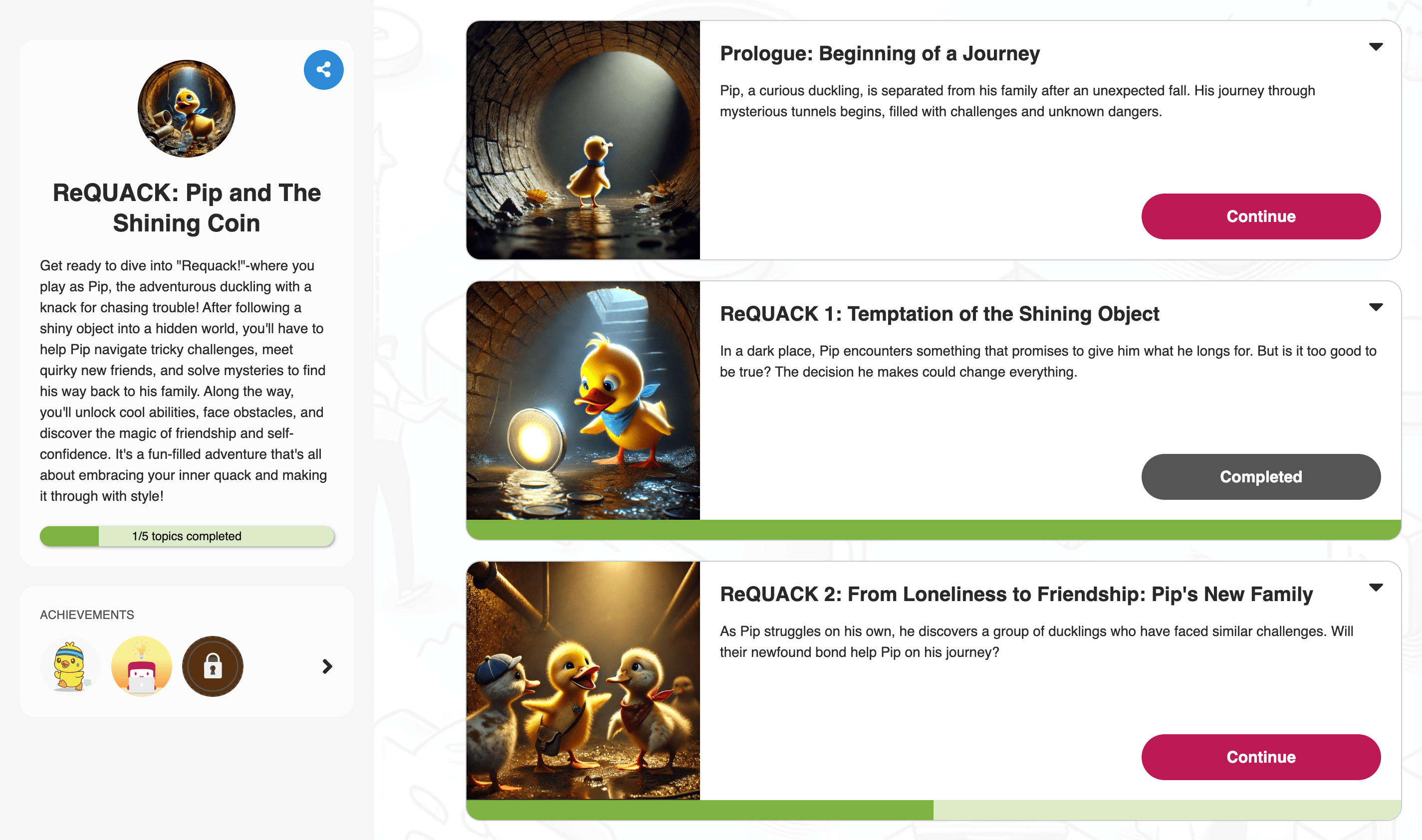
Pip, representing our users, gets separated from his duck family after falling into a drain. Lost and vulnerable, he encountered a group of rats pressuring him to seek a shining object, which triggered a hallucination of his family. Prolonged usage of this object causes low spirits and addiction. Pip eventually meets a supportive group of ducklings who taught him to resist the harmful influence and say “No” to temptation.
Visual Style:
We use vibrant colour palettes to create a playful, engaging atmosphere. We’ve chosen Arial as the primary font for its simplicity and readability, with large font sizes to highlight important text.
Tone:
Using an empathetic tone enhances users’ connection with Pip’s journey and challenges. The game also encapsulates encouragement, offering words of affirmation regularly as users progress through the game.
Interactive Elements:
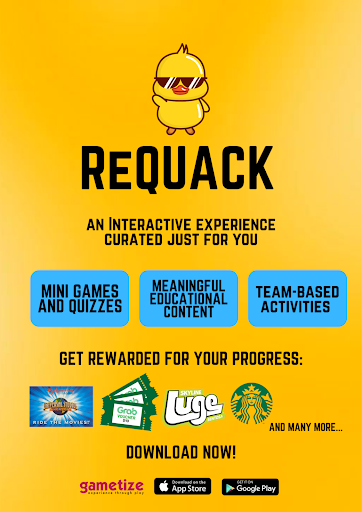
Players are required to join moderated Telegram groups for interactions in a supported space. Group rewards, such as Universal Studios tickets encourage teamwork and bonding. The immersive storyline will also boost players’ engagement.
Diagnosis and Analysis of Content
The game consists of six sequential stages, with the first two completed in the first week and the remaining stages tackled in subsequent weeks. As players progress, they unlock achievements that signify personal milestones, fostering a sense of accomplishment and encouraging deeper engagement through content and discussions.
Each ReQUACK stage covers essential aspects of recovery through interactive learning and self-reflection. Users progress from understanding basic concepts to developing positive coping mechanisms, ultimately building towards sustainable behavioural change.
ReQUACK Stages:
Stage 0: Introduction
- Familiarise users with the game and its goals
Stage 1: Understanding Thoughts, Behaviours and Emotions
- Learn the interconnection between mental states and actions using Cognitive-Based Theory principles
- Develop self-awareness around drug use triggers and patterns
Stage 2: The Importance of a Supportive Community
- Learn to build and maintain a supportive recovery network
- Understand the role of community in sustained recovery
Stage 3: Dealing with Peer Pressure and High-Risk Situations
- Understand how peer influence affects decision-making
- Build confidence in setting boundaries and saying “no”
Stage 4: Developing Positive Coping Mechanisms
- Discover healthy alternatives for managing stress and anxiety
- Develop practical tools for handling cravings
Stage 5: Consolidating the Journey
- Apply learned concepts through scenario-based challenges
- Demonstrate understanding of key recovery principles
- Validate readiness for independent decision-making
2. Learning Points and Reflection
Team’s Growth and Insights
This project allowed us to gain a deeper understanding that addiction recovery extends beyond the elimination of harmful behaviours. It requires long-term support systems and self-awareness. Moreover, relapse prevention is not solely an individual’s responsibility but also the community around an individual. Our team then designed strategies aimed at guiding recovering drug users in the right direction by fostering healthy connections.
Overcoming challenges and obstacles
The game may have limited emotional depth, as it might not fully capture the emotional intensity experienced in real-life therapy or support groups. While it can aid in building resilience, it may not offer the deep emotional processing essential for recovery. However, the accompanying Telegram groups would help users recognize the importance of real-life support groups and therapy in their recovery journey.
Branding Video: https://tinyurl.com/reQUACKtrailer
Branding Poster:

Credits: Dhruv Shetty, Iris Chan Siew Leng, Lim Zhi Qi Stacia, Ng Zhi Lin Angeline, Ong Wen Chuan, Trisha Srinivasan, Wong Yong Yee John Angus, Yap Zheng Wei