
People Psyence × KWAP: MINDorphin 2.0
People Psyence® worked with KWAP to create an entirely digital gamified mental health campaign for employees, amidst Malaysia’s COVID-19 Movement Control Order
390
Employees (62.5% of the population)
who took part in the Mood Tracker
233
Employees (37.3% of the population) who completed the program and exited the Maze
+120%
Increase in attendance of the 2020 Webinar compared to the Mental Wellness Seminar in 2019
Overview
Kumpulan Wang Persaraan (Diperbadankan), also known as KWAP, conducted a mental health campaign, MINDorphin 2.0, as part of their “Sustainable Home Run to Health” objective in May 2020.
The campaign was held during the COVID-19 Movement Control Order where
all employees worked from home, presenting an unique challenge of having to run it
entirely on online platforms.

Goals
The objectives of MINDorphin 2.0 were:
- Mental Health Knowledge: To increase the employees’ knowledge of mental-health related topics and assisted them to identify when they needed further support.
- Coping Strategies: To introduce possible solutions and coping strategies that employees could apply on themselves while they are away from the office
- Mental Wellness Status: Through the Mood Tracker questionnaire which included subtle mental wellness questions, the program helped the Human Resources team evaluate each employee’s level of mental wellness and identify those who needed genuine assistance (Disclaimer: HR only received overall score from management analysis while individual reports were shared with individuals confidentially)
- Employee Wellness Program: To introduce the employees to the Employee Wellness Program (EWP) and share the benefits of engaging with the third party consultants of the program
- Data Collection: Long-term objective to collect data which contributes to strengthening the execution of the employee wellness
program which was made available to all employees starting from April 2020 - Digital Technology Tool:
In the unique scenario of employees working from home, it was an opportunity for the HR team to test the success of a campaign being conducted fully using digital technology.
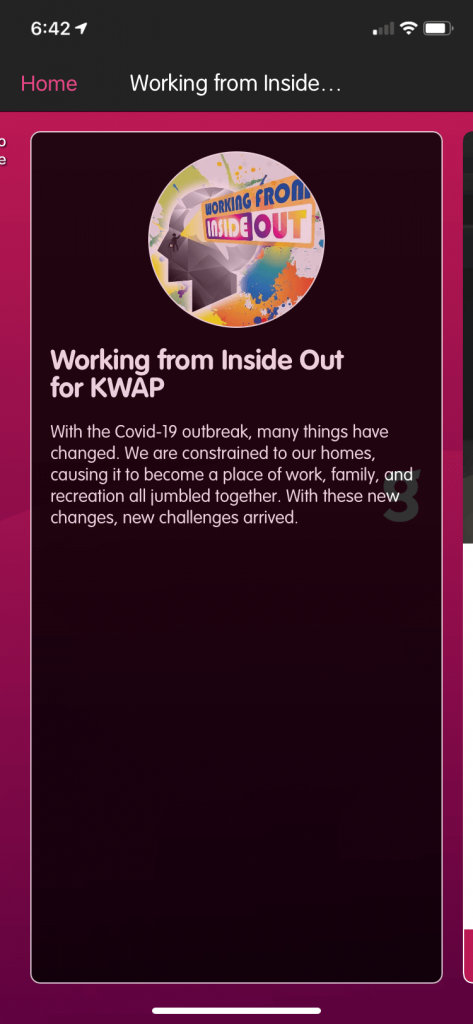

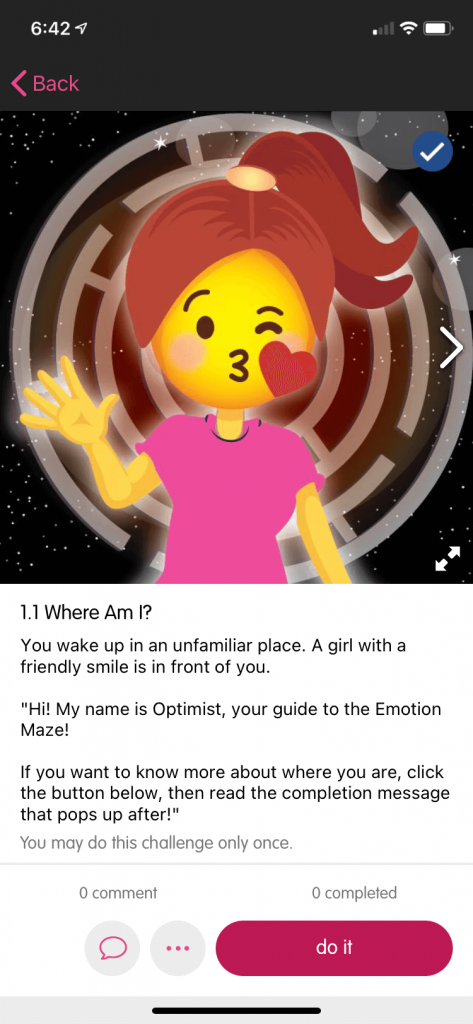
The MINDorphin 2.0 game welcomes the Player by introducing them to Optimist when entering the Emotion Maze.
The Solution: MINDorphin 2.0
MINDorphin 2.0 was structured as a knowledge-building program. It is built upon the first mental health campaign, MINDorphin 1.0 in 2019, where employees answered a mental health questionnaire, participated in a series of games during a carnival and tested out an employee wellness programme (EWP) on a trial basis.
To sustain the momentum, an interesting narrative was woven into the game. With the theme “Working From Inside Out: Building
Resilience” and a supporting character, Ms. Optimist, the challenges revolved around mental health topics. Participants had to
complete 5 episodes to learn about optimising their emotions. As the campaign ran during the Movement Control Order period, participants had more reasons to understand their emotions better and find out if they are affected by the changes in their work, home and social life.


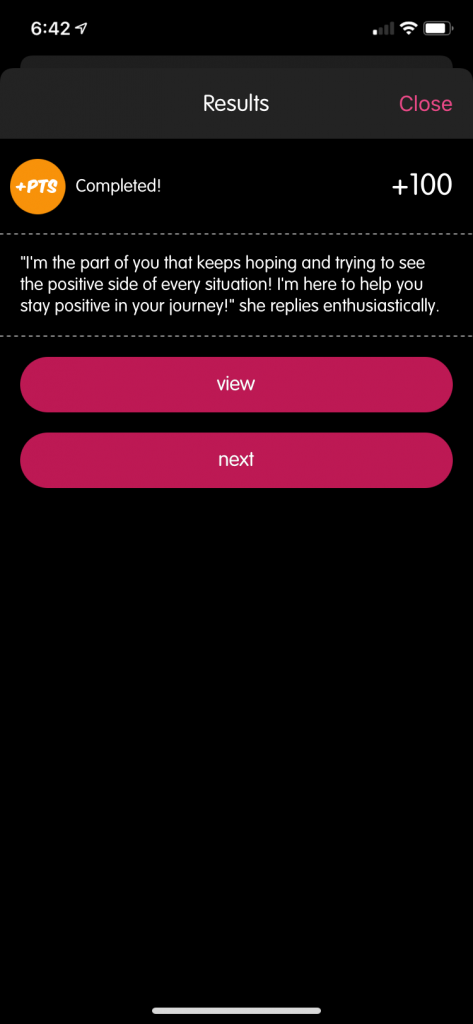
The Player is guided through the game by Little Miss Optimist, who shares guidance and advice regarding mental wellbeing and health.
MINDorphin 2.0 also allowed for surveying and information gathering to captured participants’ confidential responses
through a series of questions. For example, in KWAP’s case, questions were adopted from the Depression Anxiety Stress Scale (DASS) psychology tool. The questionnaire was part of a Mood Tracker designed as a compulsory check-in point before starting the game by
entering the maze (the narrative to “enter” the game).
To extend the excitement, one of the episodes in the Maze involved participation in the webinar, entitled “Reviving the Resilient Self”. Employees were to obtain the Secret Code that will be announced during the online webinar. It was embedded as one of the webinar contents which employees listened out for in order to move forward to the next episode.


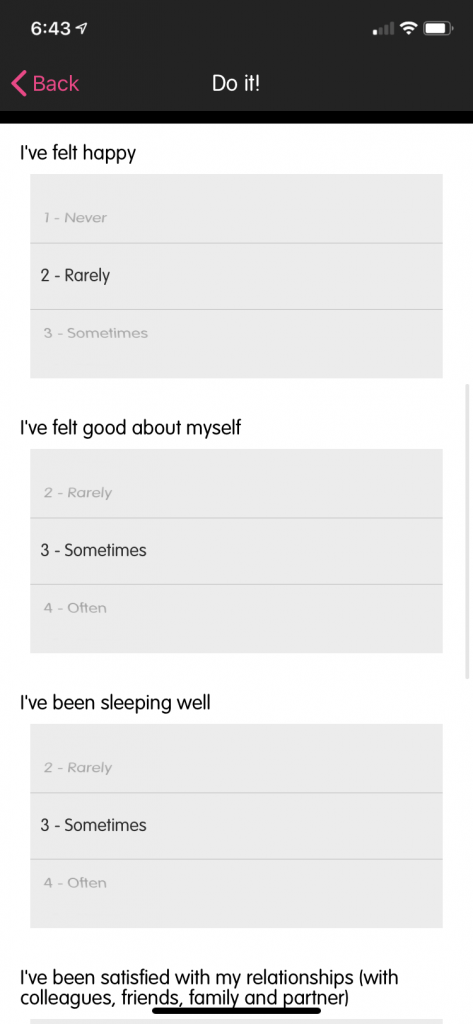


Players were asked to do different Challenges, such as uploading a photo of the Balance of Priorities Chart, sharing a motivational quote, or checking in and assessing how they were feeling.
Verdict: Gametized!
Using online platforms and clever strategies to entice participation, the program was considered an overwhelming success with a 56% increase in participation compared to the previous year. The online webinar, conducted as part of the mental wellness game, had an increase of 120% attendance versus the 2019 physical seminar, with an overwhelming attendance of 181 attendees, which was never seen before in the history of the organization.
Out of their total population, the 62.5% participation rate marked a high engagement and
involvement by their employees (across 2 offices) even though they have historically
showed preference for physical, hands-on activities.
MINDorphin 2.0 achieved its objectives of deepening
employees’ knowledge of mental health-related issues
and assisting them with forming habits and coping
strategies to address any problems. It also captured
valuable data on employees’ mental wellness status
which will help the HR team address and nip issues in the
bud. KWAP’s concern about its employees’ well-being
led to them addressing mental awareness issues a year
ahead (starting with MINDorphin 1.0 2019) and in 2020
this has come to fruition with positive results especially
during the testing and challenging times that the world is
currently facing.
This case study was provided to us by our Channel Partner, People Psyence, who assisted this client to create their gamification strategy using the Gametize Platform.