
Gamification and AI for Caregivers: Exploring Singapore with Oria!


Singapore is home to thousands of foreign caregivers who leave their families behind to care for ours. They work long hours in nursing homes and eldercare facilities, often earning around SGD 1,500 a month. But beyond the demands of their jobs, many face a quieter struggle: loneliness. Most rarely explore the city beyond their daily commute. The idea of navigating an unfamiliar MRT system, finding somewhere new to eat, or joining a community event feels overwhelming especially with limited English, tight budgets, and precious little free time. Our project set out to change that.
The Real-World Challenge
Our partner, Moral Home for the Aged Sick, told us that many of their foreign caregivers primarily from Myanmar and the Philippines feel disconnected from Singapore beyond the walls of their workplace. They stay indoors on their off days, stick to the same few familiar spots, and miss out on the accessible experiences that could genuinely improve their well-being.
This is not just about sightseeing. Social isolation affects mental health, job performance, and long-term retention. We wanted to build something that would make exploration feel safe, structured, and actually fun.
1. Highlighting 6D Playbook
We structured our project using the 6D Gamification Playbook framework, which guided us from problem identification through to content design.
Define the Problem
We identified the core problem caregivers feel too burnt out, disconnected, or unsupported to explore Singapore during their limited free time, leading to isolation and a weak sense of belonging.
Determine Goals
Our goals were to lower the psychological barrier to exploration, equip caregivers with practical navigation skills, introduce them to food, scenic, and activity experiences across Singapore, and foster community belonging through shared outings.
Decide Target Behaviours and Emotions
We targeted behaviours like navigating public transport independently, trying new places with a buddy, and joining community events. The emotions we aimed for were confidence, curiosity, and a genuine sense of belonging.
Describe and Profile Players
Our players are foreign caregivers aged 35 and below, mostly from Myanmar and the Philippines, with basic English, limited tech experience, and a strong motivation to support their families back home.
Design Gamification Strategy
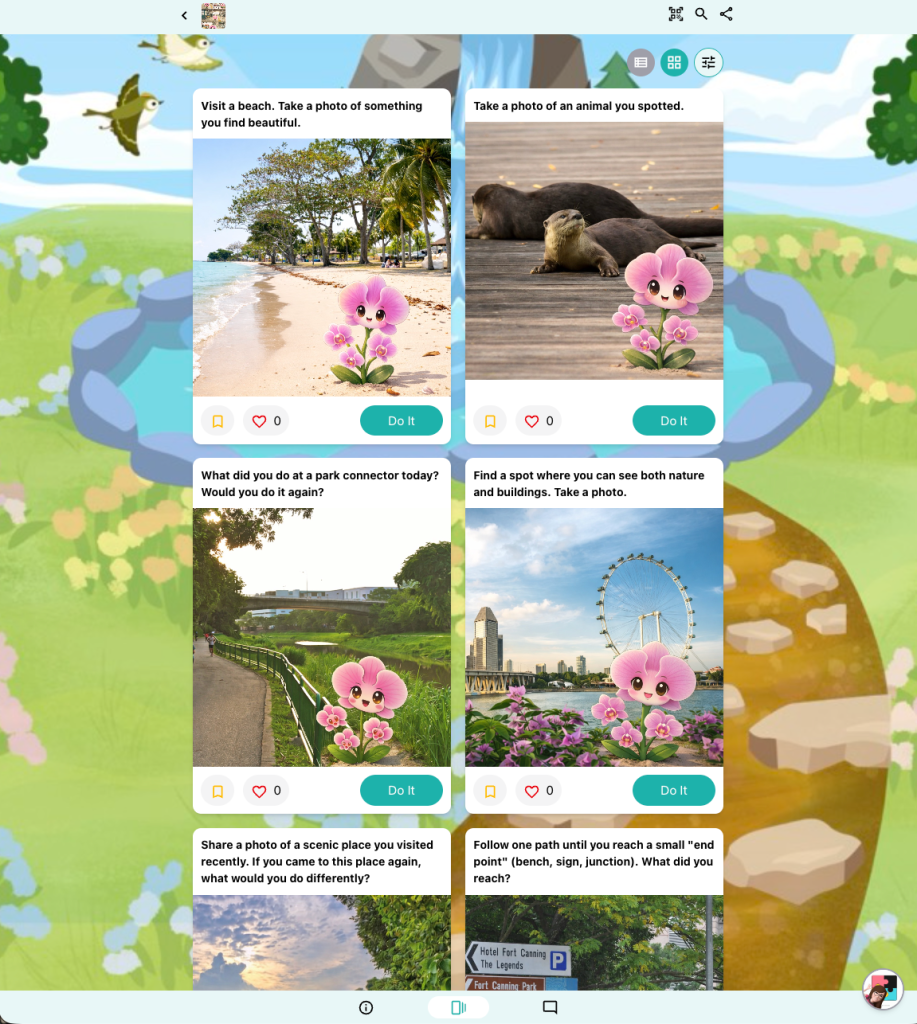
We built a gamified experience with a detective and explorer narrative. Caregivers choose their own track Food Explorer, Scenic Explorer, or Activity Explorer — and progress from indoor comfort zones to outdoor adventures, earning badges along the way.
Diagnose and Analyse Content
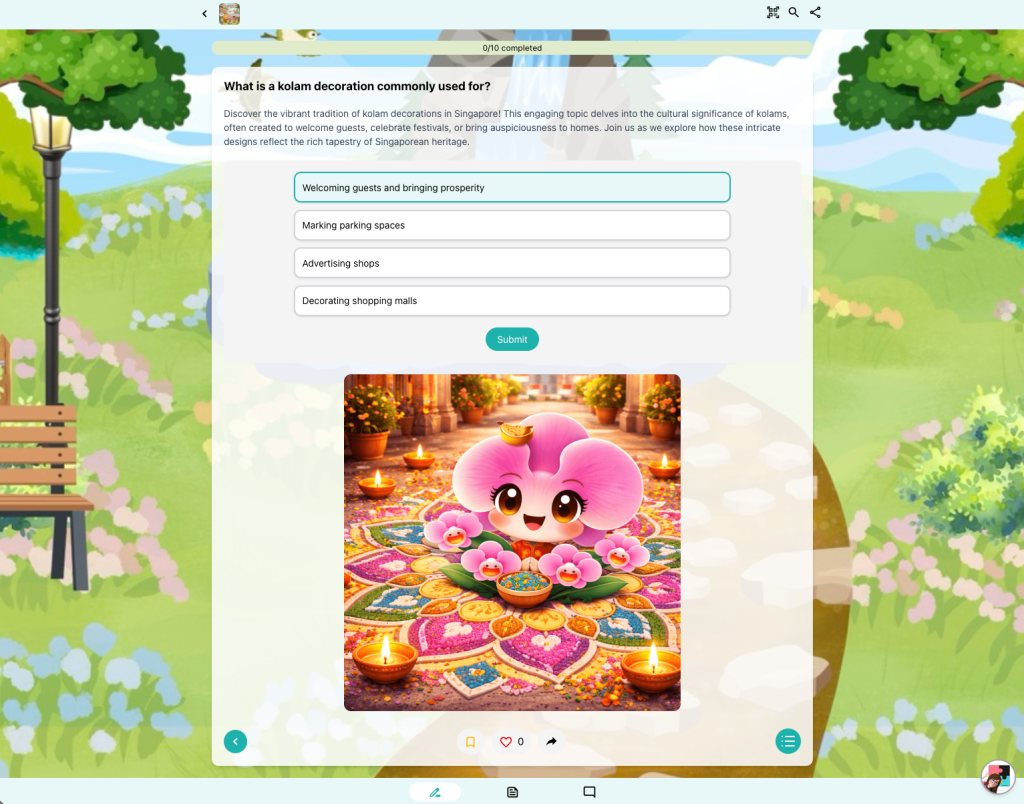
We mapped out six content modules: Navigation & Transport, Experience Singapore, Community Building, Ethnicities & Cultural Discovery, Shared Spaces, and Community Participation. Each module includes scenario-based missions, quizzes, photo check-ins, and real-world challenges.
2. Inspiration for this Project
The result is a mobile-friendly gamified programme delivered through the Gametize platform. Caregivers begin with a transport foundations module where they learn to navigate MRT lines, read route maps, and use apps like Google Maps and City mapper. From there, they choose exploration tracks that take them to hawker centres, parks, cultural neighbourhoods, and community events; all organized by region and environment type (indoor, semi-outdoor, outdoor).
Every mission is designed to be short, visual, and completable during a single off-day. Badges like Comfort Explorer, Food Navigator, Cultural Navigator, and City Explorer reward progress and create a sense of achievement. A leaderboard adds friendly competition, and group challenges encourage caregivers to explore together rather than alone.
3. Our Learnings
The biggest lesson was that exploration is an emotional challenge, not just a logistical one. We initially focused heavily on transport skills and route planning, but our conversations with caregivers revealed that the real barrier was psychological — the fear of getting lost, feeling unwelcome, or not knowing what to expect.
This shifted our entire approach. We started designing around familiar entry points (food, indoor spaces) and gradual progression rather than jumping straight to outdoor adventures. We also learned that framing exploration as a shared, social activity made a significant difference; caregivers were far more willing to try something new with a companion.
Working on this project deepened our appreciation for the invisible challenges faced by migrant workers in Singapore. These are people who care for our elderly every day, yet often lack the support to feel at home in the country they serve. If a gamified app can make even one caregiver feel confident enough to take the MRT to a new hawker centre on their day off, that is a meaningful outcome.
CREDIT:
Tanni & Xuanen – Food / Scenic / Experience
David & Regis – Community / shared spaces / Ethnicities
Teng Yi & Yuan Zhi – Navigation
1. Play the game first.
2. Use the Template game for your own initiatives.